Free Atlantic Forest lesson plan for ages 10–14
Two ready-to-teach lessons on rainforest ecosystems, food webs and tree carbon, built around one of Brazil's rarest monkeys.
What's inside
A printable PDF you can also project in class. The only prep is printing the worksheets.
- Teacher guide with timings, questions to ask and answer keys
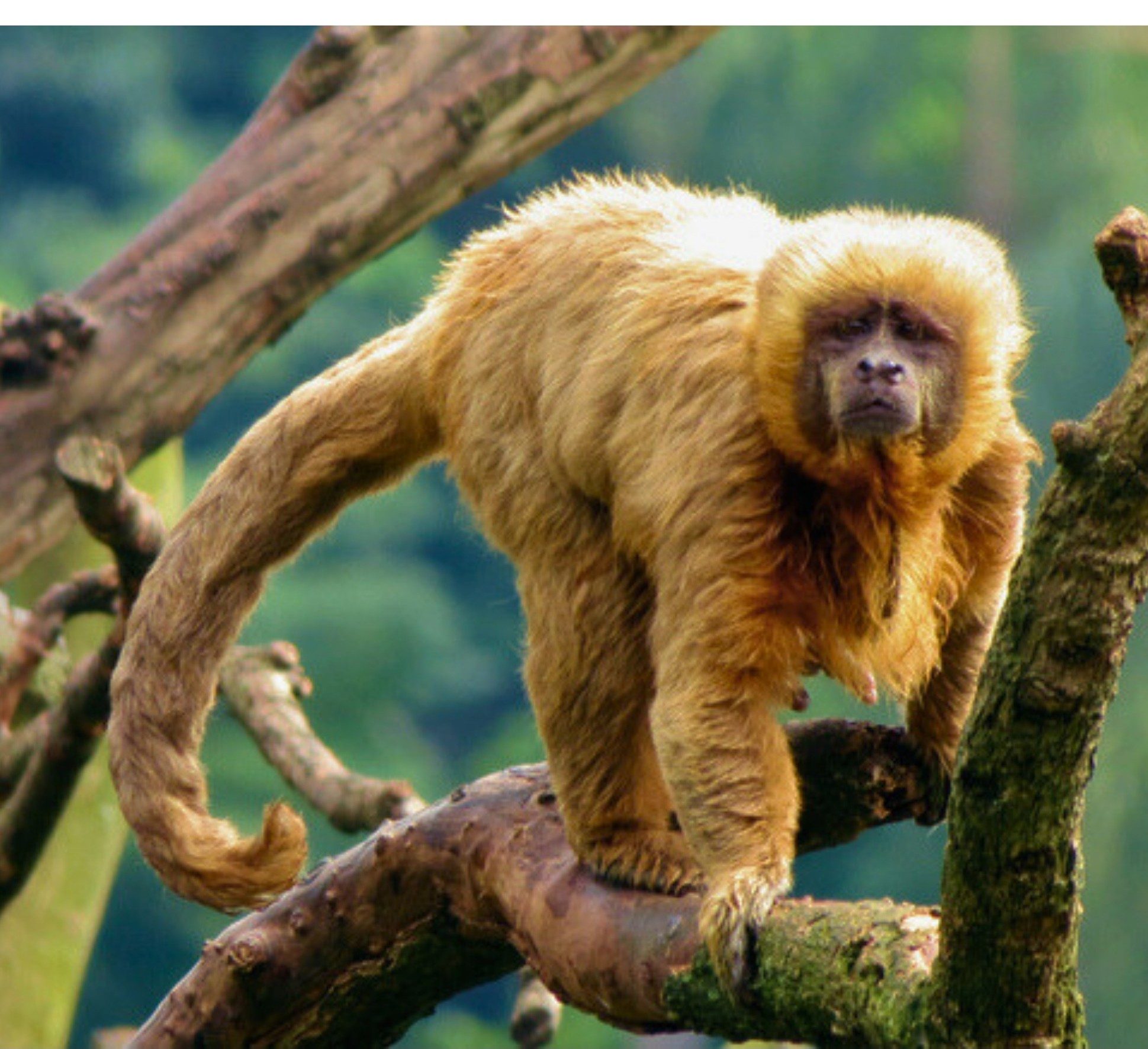
- Food web card game featuring the blond capuchin monkey
- Tree math worksheet: how many trees would balance our class's car trips?
- Design-a-corridor challenge to reconnect forest patches
- Fact sheet on the Atlantic Forest and the blond capuchin
- Ages
- 10–14 (grades 5–8)
- Time
- Two 50-minute lessons
- Subjects
- Science, geography and math
- Standards
- NGSS MS-LS2-2 and MS-LS2-5; BNCC EF07CI07
- Materials
- Printed worksheets, scissors, colored pencils
- Cost
- Free for classroom and home use
How the lessons work
Each part stands on its own, so you can teach one lesson or both.
Forest detectives
Students compare the Atlantic Forest then and now, and find out why the blond capuchin ended up stranded in small patches of forest.
Who eats whom?
A food web card game shows what happens to the whole forest when one species disappears, and how corridors of new trees help.
Tree math
Students estimate their class's driving and work out how many native trees would absorb that much CO₂ over 20 years.
Get the lesson plan
Tell us a little about you and download the PDF straight away.
Available in English and Portuguese.
Why teach the Atlantic Forest?
The Atlantic Forest once stretched along Brazil's coast and into Paraguay and Argentina. About a quarter of its original cover remains, and it is still home to thousands of species found nowhere else.
Rapid Reforest plants native trees in Paraíba to reconnect forest patches for the blond capuchin. The lessons use this real project as a case study, so students see that restoration is something people are doing right now.